Introduction
Meditation for beginners can feel overwhelming when you don’t know where to start. Perhaps you’ve heard about the incredible benefits reduced stress, improved focus, better sleep but sitting in silence seems impossible with a racing mind.
You’re not alone. Millions of people want to start meditating but struggle with common obstacles: not knowing the right technique, feeling restless, or believing they’re “doing it wrong.”
This comprehensive guide solves that problem completely.
You’ll discover exactly how to begin your meditation journey, even if you’ve never sat in silence for more than thirty seconds. We’ll cover essential techniques, practical tips for building a sustainable practice, common mistakes to avoid, and science-backed benefits that will motivate you to stay consistent.
By the end of this guide, you’ll have everything needed to start meditating today with confidence and clarity.
Whether you’re seeking stress relief, mental clarity, or simply a moment of peace in your busy day, this beginner-friendly approach will transform how you relate to your mind.
What Is Meditation and Why Does It Matter?
Meditation is a practice of focused attention and awareness that trains your mind to become more present, calm, and centered. At its core, meditation involves deliberately directing your attention whether to your breath, a mantra, body sensations, or simply observing thoughts without judgment.
For thousands of years, various cultures have practiced meditation as a path to inner peace and self-discovery. Today, modern science validates what ancient practitioners knew: meditation physically changes your brain in positive ways.
The Science Behind Meditation
Research published in prestigious journals like JAMA Internal Medicine and Psychological Bulletin demonstrates that regular meditation practice literally rewires your brain. Neuroimaging studies show increased gray matter density in areas associated with memory, emotional regulation, and self-awareness.
The prefrontal cortex responsible for decision-making and focus becomes more active and efficient. Meanwhile, the amygdala your brain’s fear center shows reduced reactivity, meaning you respond to stress more calmly.

Why Beginners Often Struggle
Many newcomers approach meditation with unrealistic expectations. They believe successful meditation means completely emptying the mind of all thoughts an impossible goal that leads to frustration and abandonment.
The truth? Thoughts are natural and expected. Meditation isn’t about stopping thoughts but changing your relationship with them. You learn to observe mental activity without getting swept away, returning gently to your focus point whenever you notice wandering.
Understanding this fundamental principle transforms the beginner experience from frustrating to freeing.
Essential Benefits of Meditation for Beginners
Starting a meditation practice offers transformative benefits that extend far beyond the cushion. Understanding these advantages provides powerful motivation to maintain consistency, especially during challenging early days.
Mental Health Benefits
Meditation significantly reduces symptoms of anxiety and depression. A meta-analysis of 47 clinical trials found that mindfulness meditation programs showed moderate evidence of improving anxiety, depression, and pain.
Regular practice decreases rumination the destructive habit of replaying negative thoughts. You develop greater emotional resilience, bouncing back from setbacks more quickly. Many practitioners report feeling more optimistic and experiencing greater life satisfaction within weeks of beginning.
Read also: How to Meditate Mindfulness for Inner Peace
Physical Health Improvements
The mind-body connection makes meditation a powerful physical health tool. Studies show regular meditators experience lower blood pressure, improved immune function, and reduced inflammation markers.
Cortisol the stress hormone linked to numerous health problems decreases with consistent practice. Sleep quality improves as racing thoughts calm at bedtime. Some research suggests meditation may even slow cellular aging by protecting telomeres, the protective caps on chromosomes.
Cognitive Enhancement
Your brain becomes sharper with regular meditation. Attention span increases, making you more productive and less distracted. Working memory improves, helping you retain and process information more effectively.
Creative problem-solving abilities expand as you learn to access quieter, more insightful mental states. Decision-making becomes clearer when you’re not overwhelmed by emotional reactivity.
How to Start Meditating: Step-by-Step Guide
Beginning your meditation journey requires no special equipment, extensive training, or perfect conditions. This practical, step-by-step approach gets you meditating effectively within minutes.
Step 1: Choose Your Space
Select a quiet location where interruptions are unlikely. This doesn’t require a dedicated meditation room a corner of your bedroom, a comfortable chair, or even your parked car works perfectly.
Consistency matters more than perfection. Using the same spot each time creates a mental association that helps you settle into practice more quickly over time.
Step 2: Set a Realistic Time
Beginners should start with just five minutes daily. This duration feels manageable and builds the habit without overwhelming you. As comfort grows, gradually extend to 10, 15, then 20 minutes.
Morning practice often works best, before daily distractions accumulate. However, any consistent time that fits your schedule works. The best time is whenever you’ll actually do it.
Step 3: Find Your Posture
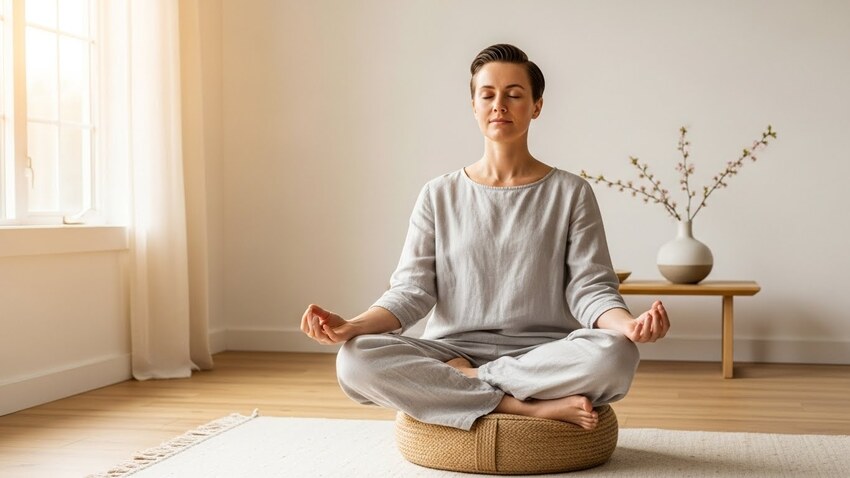
Sit comfortably with your spine naturally upright not rigid, but alert. You can sit on a cushion cross-legged, in a chair with feet flat on the floor, or even lie down if sitting is uncomfortable.
Rest your hands on your thighs or in your lap. Close your eyes gently, or soften your gaze downward if closed eyes feel uncomfortable.
Step 4: Focus on Your Breath
Breathe naturally don’t try to control or deepen your breathing. Simply observe the sensations: the coolness of air entering your nostrils, the expansion of your chest and belly, the release of exhaling.
When thoughts arise (and they will), notice them without judgment and gently return attention to your breath. This redirection is the actual practice of meditation not maintaining perfect focus.
Best Meditation Techniques for Beginners
Different meditation styles suit different personalities and goals. Experimenting with various techniques helps you discover what resonates most deeply with your needs.
Breath Awareness Meditation
The simplest and most accessible technique, breath awareness anchors attention to natural breathing patterns. Count each exhale from one to ten, then restart. When you lose count (everyone does), simply begin again at one.
This technique builds foundational concentration skills applicable to all other meditation forms. It requires no guidance, apps, or special knowledge just you and your breath.
Body Scan Meditation
Body scanning involves systematically directing attention through different body regions, noticing sensations without trying to change them. Starting at the top of your head, slowly move awareness down through your face, neck, shoulders, arms, torso, and legs.
This technique develops body awareness, releases unconscious tension, and provides a larger field of focus than breath alone helpful for very restless minds.
Guided Meditation
Recorded instructions lead you through the practice, telling you exactly what to focus on and when. Apps like Headspace, Calm, and Insight Timer offer excellent beginner programs.
Guided meditation removes the uncertainty many beginners feel, providing structure and support. It’s an excellent starting point, though eventually developing independent practice increases benefits.
Loving-Kindness Meditation
This heart-centered practice cultivates feelings of compassion and goodwill. You silently repeat phrases like “May I be happy. May I be healthy. May I be peaceful.” Then extend these wishes to loved ones, neutral people, difficult people, and finally all beings.
Loving-kindness meditation reduces self-criticism and increases positive emotions. It’s particularly beneficial for those struggling with negative self-talk or relationship difficulties.
Common Meditation Mistakes and How to Avoid Them
Understanding typical beginner errors helps you navigate around them, making your practice more effective and enjoyable from the start.
Mistake 1: Expecting Immediate Results
Many beginners expect transformation after one session. When profound peace doesn’t immediately arise, they conclude meditation “doesn’t work” for them.
Reality check: meditation is a skill developed over time. Benefits accumulate gradually, often subtly at first. Commit to at least 30 days of consistent practice before evaluating effectiveness.
Mistake 2: Fighting Your Thoughts
Trying to forcefully stop thinking creates internal tension that defeats meditation’s purpose. The harder you fight thoughts, the more they proliferate.
Instead, adopt an attitude of gentle acceptance. Thoughts are natural acknowledge them like clouds passing through the sky, then redirect attention to your focus point without frustration.
Mistake 3: Inconsistent Practice
Meditating intensively for a week, then skipping two weeks, prevents habit formation and limits benefits. Even ten minutes of daily practice outperforms an hour once weekly.
Create environmental triggers that remind you to practice. Link meditation to an existing habit perhaps immediately after brushing your teeth each morning.
Mistake 4: Judging Your Sessions
Labeling meditation sessions as “good” or “bad” creates unnecessary discouragement. A session filled with wandering thoughts isn’t a failure it’s exactly where practice happens.
Every return to focus strengthens your attention muscle. Sessions that feel challenging often produce the greatest growth.
Creating a Sustainable Meditation Habit
Building lasting practice requires strategic habit formation beyond mere willpower. These evidence-based strategies ensure meditation becomes an automatic part of your daily routine.
Start Smaller Than You Think
James Clear, author of Atomic Habits, recommends making new habits “so easy you can’t say no.” Begin with just two minutes daily. Yes, two minutes counts and it establishes the neural pathways for consistency.
Once meditating becomes automatic, duration naturally extends. A sustainable short practice beats an ambitious routine you abandon.
Anchor to Existing Habits
Habit stacking attaches new behaviors to established routines. “After I pour my morning coffee, I will meditate for five minutes.” This mental linking leverages existing autopilot behavior to trigger new ones.
Choose an anchor that happens consistently and can naturally precede meditation. Morning routines work particularly well.
Track Your Progress
Simple tracking creates accountability and reveals patterns. A basic calendar where you mark each practice day provides visual motivation. Many apps include built-in streak tracking that gamifies consistency.
Seeing accumulated practice days reinforces identity as “someone who meditates,” making the habit self-sustaining.
Forgive Missed Days Immediately
Missing a day or several doesn’t erase previous progress or doom your practice. Research shows the critical moment isn’t the slip but the response afterward.
Return to practice immediately without self-criticism. One missed day matters little; what matters is not letting one become many.
Meditation Tools and Resources for Beginners
The right tools can support your practice without becoming crutches. These carefully selected resources help beginners while encouraging eventual independence.
Recommended Meditation Apps
- Headspace offers structured courses specifically designed for absolute beginners. Its playful animations explain meditation concepts accessibly, and sessions range from 3 to 20 minutes.
- Calm excels at sleep-focused meditation with soothing Sleep Stories and music. Its beginner programs are well-paced and professionally produced.
- Insight Timer provides the largest free library of guided meditations. Once you’ve learned basics, this app offers unlimited exploration across traditions and teachers.
Physical Tools
A meditation cushion (zafu) elevates hips above knees, making cross-legged sitting more comfortable for extended periods. However, it’s entirely optional many practitioners use regular pillows or chairs.
Timer apps prevent clock-watching anxiety. Set a gentle chime for your desired duration and forget about time until it sounds.
Books for Deeper Understanding
“Wherever You Go, There You Are” by Jon Kabat-Zinn remains the classic accessible introduction to mindfulness meditation. Its practical wisdom suits beginners perfectly.
“10% Happier” by Dan Harris offers a skeptic’s journey into meditation, perfect for those uncertain about “spiritual” practices.
Conclusion
Starting a meditation practice transforms your relationship with your own mind a gift that keeps giving throughout your entire life.
You’ve learned that meditation for beginners doesn’t require special abilities, perfect silence, or hours of free time. Five minutes daily, using simple breath awareness, creates the foundation for profound change.
Remember the key principles: thoughts are natural and expected; consistency matters more than duration; every return to focus strengthens your practice. Avoid common mistakes by releasing expectations, embracing wandering thoughts, and forgiving missed days immediately.
The benefits awaiting you reduced stress, improved focus, better emotional regulation, enhanced well-being are supported by extensive scientific research and thousands of years of human experience.
Your next step? Choose a quiet spot, set a timer for five minutes, and take your first intentional breath. The journey of a thousand miles begins with a single step or in this case, a single breath.
Ready to deepen your wellness journey? Explore our guides on yoga for beginners and mindful breathing techniques to complement your meditation practice.
Read also: How to Meditate Mindfulness for Inner Peace