Introduction
When it comes to skincare, niacinamide and hyaluronic acid are two of the most buzzed-about ingredients on the market. Both promise noticeable benefits, but they work in very different ways. Understanding the differences between the two can help you create a more effective skincare routine and target your specific skin concerns. If you’ve ever wondered whether you should invest in a bottle of niacinamide serum, a hyaluronic acid serum, or both, you’re in the right place. In this article, we’ll break down how each ingredient works, what skin issues they solve, and how to use them together for maximum results.
What Niacinamide Does for Skin
Niacinamide, also known as vitamin B3, is a powerhouse ingredient for multiple skin concerns. It’s versatile, gentle, and well-tolerated by almost all skin types.
Strengthening the Skin Barrier
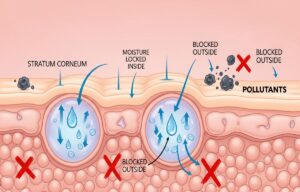
The skin barrier is your body’s first defense against environmental damage, bacteria, and moisture loss. Niacinamide supports the skin’s natural protective layer by boosting ceramide production, which helps lock in hydration. A strong barrier prevents dryness, irritation, and premature aging, making niacinamide an essential addition to any daily routine.
Reducing Inflammation and Redness
For those with sensitive or acne-prone skin, niacinamide is a lifesaver. Its anti-inflammatory properties calm redness and reduce the likelihood of flare-ups. Clinical studies have shown that consistent use can help manage acne and minimize visible irritation caused by environmental stressors.
Regulating Oil Production
Oily skin often leads to clogged pores and breakouts. Niacinamide balances sebum production, helping to reduce excess oil without over-drying your skin. Over time, this can lead to fewer breakouts and a smoother, more even complexion.
Fading Hyperpigmentation and Dark Spots
Niacinamide inhibits melanin production, which helps fade dark spots, post-inflammatory hyperpigmentation, and uneven skin tone. Unlike some harsh brightening agents, niacinamide works gently, making it ideal for sensitive skin.
Benefits of Hyaluronic Acid for Hydration
Hyaluronic acid (HA) is a natural molecule in your skin that holds water, helping skin stay plump and hydrated.
Deep Hydration Mechanism
HA is a humectant, meaning it draws moisture from the environment into the skin. This intense hydration helps combat dryness, leaving skin softer, smoother, and more supple.
Improving Skin Elasticity
Hydrated skin is more elastic. By maintaining water content, hyaluronic acid improves firmness and resilience. Over time, well-hydrated skin is less prone to sagging and fine lines.
Reducing Fine Lines and Wrinkles
Dehydrated skin accentuates wrinkles. HA fills the spaces between skin cells with water, temporarily plumping the skin and smoothing out fine lines. This is why HA is a staple in many anti-aging routines.
Suitable Skin Types for Hyaluronic Acid
Hyaluronic acid is suitable for all skin types, including sensitive and acne-prone skin, because it doesn’t clog pores or cause irritation. Whether your skin is oily, dry, or combination, HA can provide a hydration boost without unwanted side effects.
Key Differences Between Both Ingredients
While both niacinamide and hyaluronic acid improve skin health, they do so in very different ways.
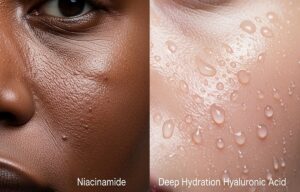
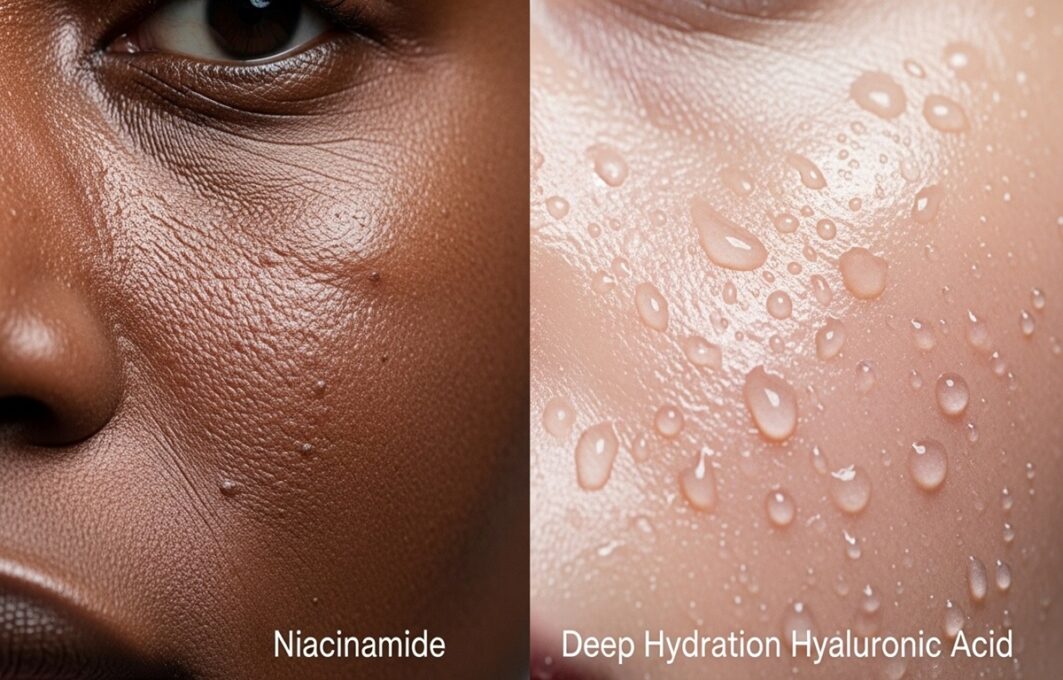
Niacinamide vs Hyaluronic Acid: Function Comparison
- Niacinamide: Strengthens barrier, regulates oil, reduces inflammation, fades pigmentation.
- Hyaluronic Acid: Provides hydration, plumps skin, improves elasticity, smooths fine lines.
Texture and Application Differences
Niacinamide serums tend to be slightly thicker, while hyaluronic acid serums are often lightweight and watery. Understanding texture helps in layering products effectively without overwhelming the skin.
Layering in Skincare Routines
A simple rule: apply HA first on damp skin to lock in moisture, followed by niacinamide to strengthen the barrier. This sequence maximizes the benefits of both ingredients.
Which One Should You Use First
Step-by-Step Skincare Routine Integration
- Cleanse: Start with a gentle cleanser.
- Hydrate with HA: Apply hyaluronic acid on slightly damp skin to draw in moisture.
- Treat with Niacinamide: Layer niacinamide serum to reduce redness and strengthen the barrier.
- Moisturize: Seal everything in with a gentle moisturizer.
- Sunscreen (AM): Protect your skin barrier during the day.
Combining Both Ingredients Safely
Many people worry about mixing ingredients, but niacinamide and hyaluronic acid are highly compatible. They complement each other, delivering hydration and barrier repair simultaneously.
Mistakes to Avoid When Using Both
- Overusing products: Too much can irritate the skin.
- Skipping sunscreen: Even the best routine can fail without UV protection.
- Layering incorrectly: Always HA first for best absorption.
Expert Opinions on Niacinamide and Hyaluronic Acid
Dr. Emma Smith, a dermatologist in London, states, “Niacinamide and hyaluronic acid are two of the safest, most effective ingredients for everyday use. They tackle different skin concerns, so using both can lead to a well-rounded, healthy complexion.”
Read also: Sensitive Skin: Step‑by‑Step Beginner Skincare Routine for Acne‑Prone
Common Myths About Niacinamide and Hyaluronic Acid
- Myth: Niacinamide causes breakouts.
Fact: It reduces inflammation and oil production, often improving acne. - Myth: HA only benefits dry skin.
Fact: HA hydrates all skin types and improves barrier function. - Myth: You can’t layer niacinamide and HA.
Fact: They are fully compatible and complementary.
Product Recommendations for Each Ingredient
| Ingredient | Product Recommendation | Price Range | Key Benefit |
|---|---|---|---|
| Niacinamide | The Ordinary Niacinamide 10% + Zinc 1% | $6–$10 | Oil regulation, spot fading |
| Hyaluronic Acid | Vichy Minéral 89 Hydrating Serum | $20–$25 | Deep hydration, plumping |
| Niacinamide + HA | La Roche-Posay Hyalu B5 Serum | $30–$40 | Barrier repair + hydration |
Conclusion
Choosing between niacinamide and hyaluronic acid isn’t an either/or situation. Niacinamide strengthens, calms, and balances, while hyaluronic acid hydrates and plumps. By understanding the roles of each, you can create a skincare routine that targets your skin’s needs, keeping it healthy, hydrated, and radiant.
FAQs
1. Can I use niacinamide and hyaluronic acid together?
Yes, they complement each other. Apply HA first on damp skin, then follow with niacinamide.
2. Which is better for acne-prone skin?
Niacinamide is ideal for regulating oil and reducing inflammation, but HA helps prevent dryness from acne treatments.
3. Can sensitive skin tolerate both ingredients?
Yes, both are gentle and suitable for sensitive skin types.
4. How long does it take to see results?
Typically, 4–6 weeks of consistent use shows visible improvements in hydration, texture, and tone.
5. Should I use these ingredients in the morning or night?
Both can be used twice daily, but always apply sunscreen in the morning for barrier protection.