Productivity Should Not Feel Like Survival
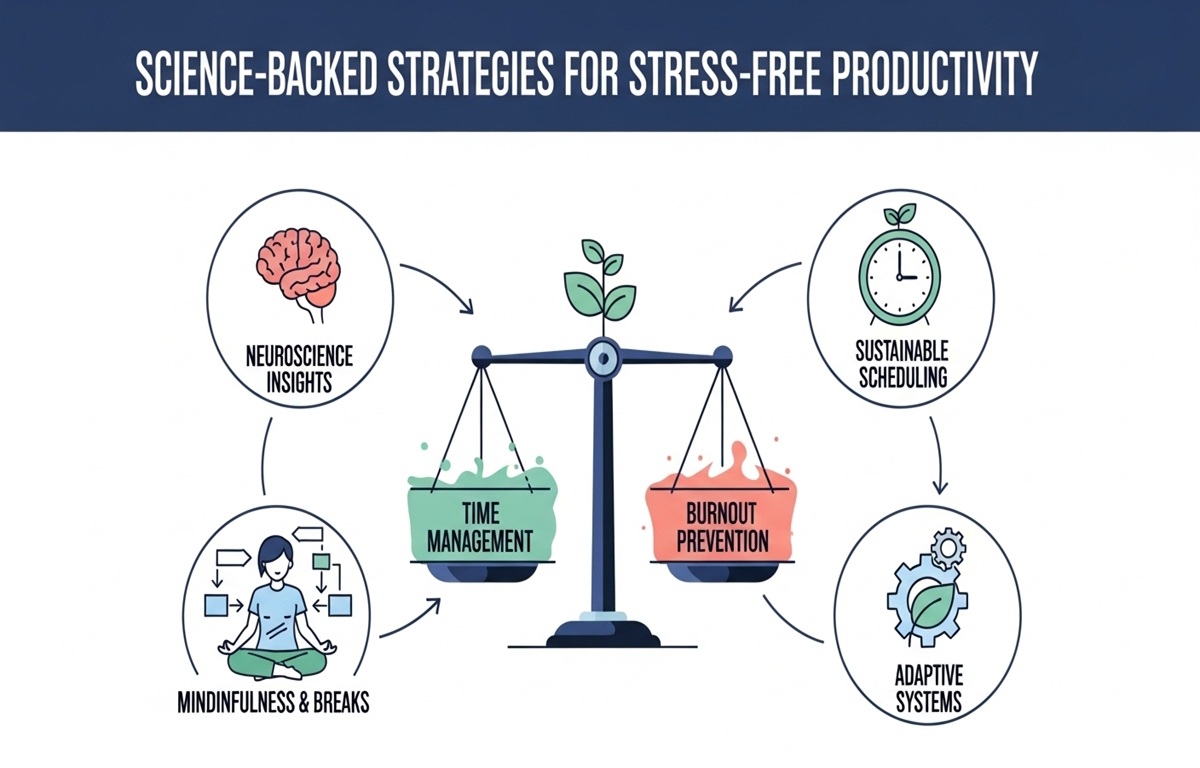
5 Stress-Free Time Management Techniques for Productivity, Balance, and Mental Clarity is more than just a productivity guide it’s a practical approach to managing your time without feeling overwhelmed. In today’s fast-paced world, many people struggle to balance work, personal life, and mental wellbeing, often leading to stress and burnout. The good news is that effective time management doesn’t require working harder; it requires working smarter. In this guide, you’ll discover simple, science-backed techniques that help you stay organized, increase focus, reduce stress, and create a healthier balance between productivity and peace of mind.
Modern productivity culture has a problem. For many corporate professionals in New York to remote freelancers in time management has become synonymous with pressure, guilt, and exhaustion. Calendars are packed. Notifications never stop. And instead of feeling organized, many people feel constantly behind.
Here’s the truth:
- Time management is not about squeezing more into your day.
It’s about designing your time in a way that protects your energy, supports your mental health, and allows meaningful progress without emotional burnout. This guide explores how to manage time effectively without stress using psychology, neuroscience, and modern productivity frameworks.
Why Traditional Time Management Often Fails
Most people are taught productivity through outdated systems:
- rigid schedules
- long to-do lists
- multitasking expectations
- constant hustle mentality
These approaches ignore how the brain actually works.
1. The Myth of Endless Focus
Human attention works in cycles. Studies show peak focus occurs in intervals, not continuous stretches. Trying to work nonstop creates cognitive fatigue.
2. Over-Optimization Leads to Stress
Many productivity systems create anxiety because:
- they track every minute
- they prioritize efficiency over well-being
- they treat rest as laziness
But sustainable productivity includes rest as part of the process.
Read our post: Long-Term Mental Wellbeing for All Ages
The Science Behind Stress-Free Time Management

Stress-free productivity is rooted in three principles:
1. Energy Management Over Time Management
Instead of asking: “How can I do more today?” Ask: “When do I naturally have the most energy?” Track:
- mental peaks
- low-energy periods
- emotional triggers
2. Decision Reduction
Decision fatigue drains productivity. Create routines that eliminate daily choices:
- consistent morning ritual
- planned work blocks
- defined shutdown routine
3. Psychological Safety
Your brain works better when it feels safe. Constant urgency signals threat to your nervous system, leading to procrastination and overwhelm.
Strategy 1: The Priority Pyramid Method
Instead of writing endless to-do lists, categorize tasks:
Tier 1. Essential (1–3 tasks only)
High-impact tasks aligned with goals.
Tier 2. Important but Flexible
Tasks that support progress but aren’t urgent.
Tier 3. Optional or Maintenance
Emails, minor admin tasks. Why this works:
- Reduces overwhelm.
- Creates clarity.
- Prevents overloading your schedule.
Strategy 2: Time Blocking But Gently
Time blocking works best when flexible. Avoid rigid schedules like:
❌ 9:00–9:30 write report
❌ 9:30–10:00 answer emails
Instead:
✅ Morning Deep Work Block
✅ Admin Block
✅ Creative Thinking Block
This aligns with natural attention flow.
Strategy 3: The 60% Rule ( Workplace Secret)
High-performing professionals rarely schedule 100% of their time. Instead:
- Plan only 60% of your day.
- Leave 40% for unexpected events.
Benefits:
- reduces stress when plans change
- increases adaptability
- prevents burnout
Strategy 4: The Emotional Check-In System
Modern productivity recognizes emotional state as part of time management. Before starting work:
Ask yourself:
- What energy level am I at?
- What emotional state am I in?
- What type of task fits this mood?
Examples:
- Low energy → administrative tasks
- High energy → creative or strategic work
Strategy 5: Create “Stop Working” Rituals
Many people struggle because work never truly ends. Design a daily shutdown ritual:
- review accomplishments
- set tomorrow’s priorities
- physically close workspace
This signals your brain that work is complete.
Digital Minimalism: Managing Technology Without Stress
Technology can either support productivity or destroy focus. Tips:
- Turn off non-essential notifications.
- Batch check email 2–3 times daily.
- Use app blockers during focus sessions.
Time Management for Remote Workers

Remote work created new challenges:
- blurred boundaries
- longer work hours
- social isolation
Solutions:
- define a start time and end time
- create physical workspace separation
- schedule intentional breaks
The Role of Rest in High Performance
Rest is not the opposite of productivity. It is part of productivity. Types of restorative breaks:
- short walks
- stretching
- meditation
- power naps
Research shows breaks improve memory consolidation and creativity.
Emotional Productivity: Working With Yourself, Not Against Yourself

Stress-free time management requires self-compassion. Instead of:
“I didn’t do enough today.” Try:
“I completed meaningful progress.”
Language changes emotional experience.
Weekly Planning Framework
Instead of planning daily from scratch:
- Review past week.
- Identify top goals.
- Schedule deep work blocks.
- Add buffer time.
- Protect rest periods.
Morning Routine for Stress-Free Productivity
Effective morning routines include:
- hydration
- light movement
- intention setting
- limiting early phone use
Avoid immediately checking emails.
Evening Routine to Prevent Mental Overload
End the day with:
- journaling
- reading
- technology boundaries
- consistent sleep schedule
Common Time Management Mistakes
- Over-scheduling.
- Multitasking excessively.
- Ignoring energy rhythms.
- Saying yes to everything.
- Not tracking workload realistically.
Long-Term Systems That Actually Work
1. The 3-Goal Rule
Never pursue more than three major goals simultaneously.
2. Theme Days
Example:
- Monday – Planning
- Tuesday – Deep Work
- Friday – Admin
3. Task Batching
Group similar tasks to reduce cognitive switching.
Mental Health and Productivity
Stress-free productivity supports emotional health. For additional guidance on mental well-being and time balance:
👉 https://www.apa.org (American Psychological Association)
👉 https://www.mindful.org (Mindfulness-based productivity research)
Final Thoughts: Time Management as Self-Respect
Managing time without stress is not about controlling every moment. It’s about:
- protecting your attention
- honoring your energy
- creating space for meaningful work and meaningful life.
When productivity aligns with humanity, time stops feeling like an enemy and starts becoming a partner.